A Real-World Review of the African Jewelry Redwork Design
As someone who stitches for clients and runs a small embroidery business, I look at every design file with a practical eye. I'm not just judging its aesthetic; I'm thinking about how it will perform on fabric, what kind of product it will elevate, and whether it’s a smart choice for my time and materials. Today, I’m sizing up the African Jewelry Design Redwork, a classic style embroidery design, for real project use.
The First Impression: A Statement of Elegant Simplicity
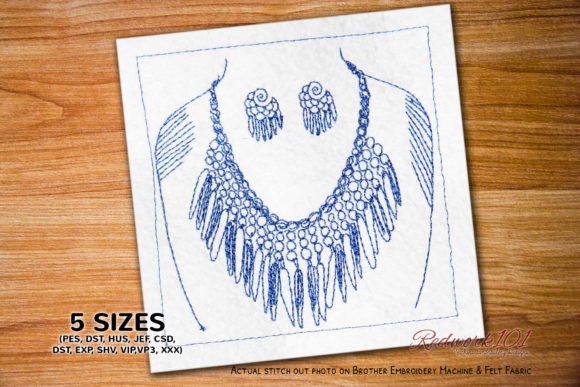
This design lands with a quiet confidence. The redwork style—typically single-color, often with a focus on linework—gives it an immediate timelessness. The jewelry motif itself feels celebratory and refined, more like an artful accessory than a literal representation. It creates a mood of cultured elegance, not loud festivity. The layout is balanced, and the detail level appears intentional: it looks designed to be clearly readable as embroidery, without overly dense areas that might puck thinner fabrics. Its visual personality is sophisticated, making it a natural fit for projects where understated beauty is the goal—think personalized gifts, boutique home decor, or elevated apparel.
Where This Design Finds Its Perfect Home
I immediately pictured this on a high-quality linen tote bag. The design’s elegance would transform a simple bag into a sellable, boutique-style product. It’s also a strong candidate for the center of a pillow cover, adding a global-artisan touch to a living space. For custom apparel, it would shine on the breast of a crisp cotton button-down or subtly on the sleeve of a lightweight sweater. Its theme makes it a thoughtful choice for wedding gifts or holiday embroidery aiming for something more unique than seasonal cliché.
In a craft business context, this is a design you could use across multiple products to build brand consistency. Imagine it on a tea towel, an apron, and a set of napkins—a cohesive collection for an Etsy shop. For baby embroidery, it would be beautiful on a special heirloom blanket or a decorative wall piece for a nursery, offering a cultural richness that stands out from typical cartoon motifs.
The Practical Stitching Considerations
Performance on real fabric is everything. Redwork designs often rely on clean linework, so stitch density is a key watch-point. If the outlines are done with a satin stitch, they’ll need proper stabilizer to prevent distortion, especially on stretchy fabric like t-shirts. If it uses a running stitch, it’ll be lighter and better for thin fabric. The description notes the box stitch is optional and its color may vary, which is a practical heads-up. It means the core embroidery file is focused on the jewelry motif itself, giving you flexibility.
Scenarios Where You Should Proceed with Care
This design likely has some detailed corners and smaller elements within the jewelry shapes. On small hoop sizes, you must ensure those details remain crisp—test it first. Embroidering on dark fabric requires careful thread color selection; a classic red might not pop, so consider a gold or ivory thread to maintain the “redwork” aesthetic on a dark background. Applying it to curved surfaces like caps demands extra stabilization to keep the symmetrical layout looking even.
For products destined for frequent washing, like kitchen towels or baby items, ensure the stitch structure is robust enough. A densely filled area might hold up better than a single thin outline over years of use. Always test the design on scrap fabric first, using the same material and thread colors you plan for the final project. This is non-negotiable for a professional output.
How This Design Translates to Customer Value
When a design like this is executed well, it directly boosts product value and customer trust. It looks intentional and professionally made, not randomly selected. That handmade presentation feels curated, which engages buyers looking for something special. For an Etsy seller, this aesthetic can help a listing stand out in a crowded market. As a personalized gift, it carries a narrative—it feels chosen with thought, which enhances its giftability.
From a commercial embroidery standpoint, using a design with this clear thematic strength can aid in recognition. If your small shop focuses on global-inspired patterns, this becomes a coherent part of your portfolio. Before selling any finished product, always confirm licensing for the digital embroidery file to ensure your craft business is operating on solid ground.
Essential Designer Notes Before You Hoop Up
- Check thread color contrast against your final fabric. Run a test in black and white mockups to see how the silhouette holds up if you plan to offer the design in multiple colorways.
- Review stitch density by looking at the file in your software. Are there large fill areas that might require multiple color changes or cause fabric pull?
- Inspect small details in the jewelry elements. Will they stitch out clearly on your target fabric texture, like a nubby linen or a smooth cotton?
- Compare light and dark fabric backgrounds virtually. The design’s mood can change dramatically with background choice.
- Use the proper stabilizer for your project type. A tote bag needs a different approach than a delicate baby blanket.
- Consider its use for both personal and commercial projects from the start. This influences how you might digitize adjustments or create printable mockups for your shop.
The African Jewelry Design Redwork is a versatile embroidery design within the Accessories category. Its strength lies in its stylistic clarity and elegant theme. It’s not a design for every project, but for the right project—where sophistication and cultural appreciation are the goals—it can become a standout feature on your custom apparel, embroidered patch, or small shop product. Approach it with the practical steps above, and you’ll likely end up with a finished product that feels both beautifully handmade and intelligently designed.